
Choosing between a root canal and a tooth extraction depends on the extent of the damage, your oral health, and the likelihood of saving the affected tooth. In most cases, a root canal is preferable when the natural tooth can be restored because it preserves your bite and helps prevent neighboring teeth from shifting. However, extraction may be necessary when a tooth is too damaged to repair. Understanding the differences between these treatments can help you make an informed decision with your dentist.
Root Canal vs. Tooth Extraction: Understanding the Key Differences
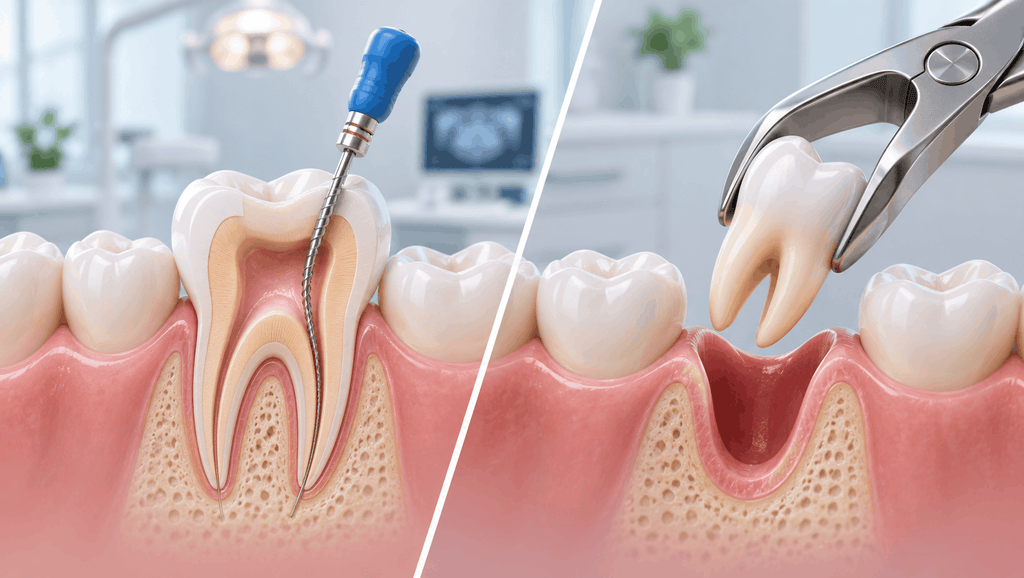
Root canal treatment removes infected or damaged tissue from inside a tooth, while tooth extraction removes the entire tooth from its socket. The main difference is that a root canal aims to preserve your natural tooth, while extraction removes the affected tooth and may require a replacement.
What Is a Root Canal Treatment?
A root canal treatment saves a natural tooth by removing infected or inflamed pulp, cleaning the inner canals, and sealing the space to prevent further infection. The dentist typically restores the tooth with a filling or crown, depending on how much healthy structure remains.
The procedure usually involves local anesthesia, so you should feel pressure rather than sharp pain during treatment. Root canals can relieve toothache, control infection, and help you retain your natural tooth for many years.
What Is a Tooth Extraction?
A tooth extraction removes a tooth that cannot be adequately repaired or needs to be removed for another clinical reason. A dentist or oral surgeon uses local anesthesia to numb the area before loosening and removing the tooth.
Simple extractions involve visible teeth that can be removed without extensive surgery, while surgical extractions may be necessary for broken, impacted, or difficult-to-access teeth. Afterward, the extraction site must heal, and your dentist may discuss replacement options to maintain proper chewing function and alignment.
Root Canal vs. Tooth Extraction: Side-by-Side Comparison
Root canal treatment preserves the natural tooth, while extraction removes it and may lead to additional restorative treatment. The following comparison highlights the main differences.
| Factor | Root Canal | Tooth Extraction |
| Primary purpose | Treat infection and preserve the tooth | Remove a damaged or problematic tooth |
| Anesthesia | Usually local anesthesia | Usually local anesthesia |
| Pain during treatment | Typically minimal with adequate anesthesia | Typically minimal with adequate anesthesia |
| Recovery | Often a few days of mild tenderness | Several days to one or two weeks, depending on complexity |
| Additional treatment | A crown or filling may be needed | An implant, bridge, or denture may be recommended |
| Natural tooth preservation | Yes | No |
| Long-term considerations | Protects natural tooth structure | May affect bite and neighboring teeth if the gap remains untreated |
The appropriate treatment depends on the tooth’s condition, the extent of infection, and the likelihood of a successful restoration.
Root Canal vs. Tooth Extraction: Which Is Better for Your Dental Health?
A root canal is generally the preferred option when a tooth can be predictably restored because retaining natural teeth supports normal chewing and helps preserve the surrounding structures. Extraction becomes appropriate when the damage is too extensive or saving the tooth would have a poor prognosis.
Why Saving Your Natural Tooth Is Often the Better Option
Saving your natural tooth helps maintain your original bite, chewing efficiency, and the alignment of surrounding teeth. A successfully treated tooth also avoids the immediate loss of natural tooth structure associated with extraction.
Other benefits include:
- Preserving the tooth’s natural position and function.
- Avoiding or delaying the need for an artificial replacement.
- Maintaining normal contact with neighboring teeth.
- Supporting comfortable chewing when the tooth is properly restored.
However, a root canal cannot guarantee that a tooth will last indefinitely. The remaining tooth structure, quality of the final restoration, oral hygiene, and regular dental care all influence long-term success.
When Tooth Extraction May Be the Better Choice
Extraction may be the better option when a tooth has severe structural damage, an unfavorable fracture, or insufficient healthy structure to support a restoration. It may also be recommended when advanced periodontal disease has significantly weakened the tooth’s supporting tissues.
Dentists may consider extraction when:
- A fracture extends below the gumline or into the root in a way that prevents predictable repair.
- Extensive decay leaves too little healthy tooth structure.
- Infection persists despite appropriate treatment.
- The tooth has severe mobility due to advanced gum disease.
- The cost or feasibility of preserving the tooth does not align with the patient’s circumstances and clinical options.
Extraction should not automatically be considered the simpler long-term solution. Your dentist should explain the consequences of leaving the gap untreated and the available replacement options.
Factors Dentists Consider Before Recommending Treatment
Dentists evaluate the tooth’s restorability, surrounding bone, gum health, and the extent of infection before recommending a root canal or extraction. They also consider your overall oral health, medical history, budget, and preferences.
Important factors include:
- Extent of decay: Deep decay may be treatable if enough healthy structure remains.
- Cracks and fractures: Some fractures make the tooth impossible to restore reliably.
- Root condition: Root damage can affect the likelihood of successful treatment.
- Gum and bone health: Healthy supporting tissues improve the outlook for retaining a tooth.
- Restoration requirements: A root canal may require a crown, adding to the overall treatment plan.
- Long-term goals: Your dentist should consider how each option affects chewing, appearance, and future dental work.
Root Canal vs. Tooth Extraction: Which Procedure Is More Painful?
Both root canal treatment and tooth extraction can usually be performed with local anesthesia, making severe pain during the procedure uncommon. Discomfort afterward varies depending on the severity of the infection, the complexity of treatment, and your individual healing response.
Does a Root Canal Hurt?
A root canal should not cause significant pain during treatment when the tooth is adequately numbed. The procedure removes inflamed or infected pulp, which can be the source of the severe toothache that prompted the appointment.
Mild soreness or tenderness may continue for several days, especially when biting down. Your dentist can recommend appropriate pain relief and explain when persistent symptoms require follow-up.
Does Tooth Extraction Hurt?
Tooth extraction typically causes pressure or movement sensations rather than sharp pain when local anesthesia is effective. After the anesthetic wears off, you may experience soreness, swelling, and tenderness around the extraction site.
Surgical extractions generally cause more postoperative discomfort than straightforward extractions. Following your dentist’s instructions for pain management, rest, and wound care can help reduce complications.
Comparing Pain and Discomfort After Each Procedure
The difference in pain between a root canal and extraction depends on the individual case rather than the procedure alone. A severely infected tooth may already cause substantial pain, and either treatment can relieve the underlying problem.
Root canal treatment commonly involves temporary tenderness, while extraction also requires the socket and surrounding tissues to heal. Your dentist can estimate what to expect based on the tooth’s condition and the complexity of the procedure.
Root Canal vs. Tooth Extraction Cost: Which Is More Affordable?
Tooth extraction often has a lower initial price than root canal treatment, but the total cost depends on the tooth’s location, the procedure’s complexity, insurance coverage, and any follow-up restoration. A fair comparison should include the full treatment plan rather than the procedure fee alone.
How Much Does a Root Canal Cost?
In the United States, a root canal may cost approximately $700 to $1,500 or more, depending on the tooth and provider. Front teeth generally cost less to treat than premolars and molars because molars typically have more complex root canal systems.
Additional expenses may include:
- Dental examinations and X-rays.
- A permanent filling or buildup.
- A dental crown, often needed for molars and some other weakened teeth.
- Follow-up appointments if complications occur.
These are broad estimates, not guaranteed prices. Request an itemized treatment plan to understand the expected total before scheduling treatment.
How Much Does a Tooth Extraction Cost?
A simple tooth extraction may cost approximately $75 to $300 per tooth, while surgical extraction can range from around $180 to $600 or more. Impacted teeth, complex surgical cases, sedation, and specialist fees can increase the final bill.
Additional costs may include:
- Consultations and diagnostic imaging.
- Sedation or other anesthesia services.
- Bone grafting when clinically indicated.
- A dental implant, bridge, or denture to replace the missing tooth.
Actual fees vary by location, insurance plan, and clinical complexity, so confirm your estimate with the dental office.
Root Canal vs. Extraction Cost: Long-Term Financial Considerations
The root canal vs. extraction cost comparison should account for both immediate treatment and long-term consequences. Although extraction may cost less upfront, replacing the missing tooth can make the overall treatment plan more expensive.
For example, an extraction followed by a dental implant may involve removal, implant placement, an abutment, and a crown. A root canal may also require a crown, but it preserves the natural tooth instead of replacing it.
Ask your dentist to compare the complete costs of both options, including insurance benefits, maintenance, and potential future procedures. Dr. Saif Shere can provide an individualized dental assessment and guidance on appropriate treatment options.
Tooth Extraction vs. Root Canal Recovery: What Should You Expect?
Root canal recovery usually involves mild tenderness for several days, while extraction recovery requires the socket to heal and may take one to two weeks for initial healing. The exact timeline depends on the procedure, the tooth’s condition, and your general health.
Recovery Time After a Root Canal
Most patients can return to normal daily activities shortly after a root canal, although temporary tenderness may persist for a few days. A tooth with significant infection or inflammation may remain sensitive longer.
During recovery:
- Avoid chewing hard foods on the treated tooth until it has been permanently restored.
- Follow your dentist’s instructions for pain relief and oral hygiene.
- Schedule any recommended crown or permanent restoration promptly.
- Contact your dentist if pain worsens, swelling develops, or your bite feels uneven.
A final crown or filling helps protect the tooth from reinfection and structural damage.
Recovery Time After Tooth Extraction
Initial recovery after a tooth extraction generally takes several days, while gum healing and deeper tissue repair take longer. Surgical extractions often require more recovery time than simple extractions.
To support healing:
- Bite gently on gauze as instructed to control bleeding.
- Avoid smoking, straws, and forceful rinsing during the initial healing period.
- Choose soft foods and gradually return to your usual diet.
- Keep the area clean as your dentist instructs.
- Seek dental care for severe worsening pain, fever, or persistent bleeding.
These precautions help protect the blood clot that forms in the socket and reduce the risk of dry socket.
Tips for a Smooth Recovery After Either Procedure
Following your dentist’s postoperative instructions is the most effective way to support healing after either treatment. Good oral hygiene, appropriate pain management, and timely follow-up can reduce the risk of complications.
Helpful recovery practices include:
- Take medications only as directed by your dentist or healthcare professional.
- Avoid hard, crunchy, or very hot foods if they irritate the treated area.
- Brush and floss carefully without disturbing healing tissues.
- Avoid smoking or tobacco use, particularly after extraction.
- Contact your dentist if symptoms worsen instead of gradually improving.
Root Canal or Extraction: How to Know Which Treatment You Need
A root canal is usually appropriate when the tooth is infected or damaged but can still be restored. Extraction may be necessary when the tooth cannot be repaired predictably or poses an ongoing risk to oral health.

Signs You May Need a Root Canal
Persistent tooth pain, prolonged sensitivity to hot or cold, and swelling around a tooth may indicate pulp inflammation or infection that requires evaluation. However, symptoms alone cannot confirm that a root canal is necessary.
Other possible warning signs include:
- Pain when chewing or applying pressure.
- Darkening or discoloration of a tooth.
- A recurring pimple or drainage near the gumline.
- Deep decay or a previous injury to the tooth.
- An abscess identified during a dental examination.
Seek prompt dental care if these symptoms develop. Facial swelling, fever, or difficulty swallowing or breathing may indicate a serious infection requiring urgent medical attention.
Signs Tooth Extraction May Be Necessary
Extraction may be recommended when a tooth is too damaged or unstable to restore safely. Severe decay, certain root fractures, and advanced periodontal disease can make preservation impractical.
After reviewing X-rays and examining the surrounding tissues, a dentist may also identify a tooth that cannot be predictably repaired. An early evaluation can clarify options before the damage progresses.
Can an Infected Tooth Be Saved Instead of Pulled?
Yes, many infected teeth can be saved with root canal treatment if enough healthy tooth structure and supporting tissue remain. The procedure removes infected pulp, disinfects the canals, and seals the tooth before it receives an appropriate restoration.
However, not every infected tooth can be saved. A vertical root fracture, extensive destruction, or inadequate periodontal support may make extraction the more predictable choice.
Saving a Tooth vs. Pulling It: Long-Term Effects on Oral Health
Preserving a restorable natural tooth generally supports normal chewing and alignment, while an untreated gap can affect neighboring teeth and bite function. The long-term outcome depends on the treatment selected, the condition of the surrounding tissues, and ongoing dental care.
Benefits of Keeping Your Natural Tooth
Keeping your natural tooth preserves its original position and helps maintain the relationship between neighboring teeth. It also avoids the need to replace that tooth with an implant, bridge, or denture.
Additional benefits include:
- Maintaining natural chewing function.
- Reducing the risk of neighboring teeth drifting into the gap.
- Preserving the existing tooth structure above the gumline.
- Supporting a familiar bite and comfortable eating.
A root canal-treated tooth still requires regular checkups because it can develop new decay, cracks, or other problems.
What Happens If You Extract a Tooth and Do Not Replace It?
Leaving an extracted tooth unreplaced can allow neighboring teeth to shift, change how opposing teeth meet, and, in some cases, reduce chewing efficiency. Over time, the missing tooth may also contribute to changes in the surrounding bone.
The impact depends on which tooth is missing, your bite, and the condition of the rest of your mouth. Your dentist can determine if replacement is recommended or if monitoring the space is appropriate.
Tooth Replacement Options After Extraction
Dental implants, bridges, and removable partial dentures are common options for replacing a missing tooth. Each solution has different costs, maintenance needs, and suitability requirements.
- Dental implants: Replace the tooth root with an implant that supports a crown, provided you are a suitable candidate.
- Dental bridges: Use neighboring teeth or restorations to support an artificial tooth across the gap.
- Removable partial dentures: Replace one or more missing teeth with an appliance that can be removed for cleaning.
Your dentist can compare these options based on bone health, neighboring teeth, budget, and long-term goals.
Pros and Cons of Root Canal vs. Tooth Extraction
Root canal treatment prioritizes preserving the natural tooth, while extraction removes the affected tooth and may simplify treatment when restoration isn’t feasible. The advantages and disadvantages of each depend on the tooth’s condition and the complete cost of care.
Advantages and Disadvantages of Root Canal Treatment
Root canal treatment can relieve infection-related pain and preserve a natural tooth that would otherwise need to be removed. Its main disadvantages include the cost, the potential need for a crown, and the possibility of future complications.
Advantages:
- Preserves the natural tooth.
- Maintains chewing function and alignment.
- May avoid the need for tooth replacement.
- Treats infection inside the tooth.
Disadvantages:
- May require multiple appointments.
- Often requires a crown or other restoration.
- Can be more expensive initially than extraction.
- May fail if the tooth fractures or infection persists.
Advantages and Disadvantages of Tooth Extraction
Extraction removes a tooth that cannot be saved and may resolve problems associated with severe damage or infection. However, it permanently removes the natural tooth and may create additional treatment needs.
Advantages:
- Removes a tooth that cannot be predictably restored.
- May have a lower initial cost.
- Can eliminate the source of infection when combined with appropriate care.
- May be the most practical treatment for certain severely damaged teeth.
Disadvantages:
- Permanently removes the natural tooth.
- Requires healing of the extraction site.
- May affect chewing or alignment if the gap causes functional problems.
- Replacement can add significant long-term expense.
How to Decide Between a Root Canal and Tooth Extraction
The best decision depends on whether your tooth can be restored successfully, how much treatment it needs, and your long-term oral health goals. Ask your dentist to explain the expected outcome, total cost, and alternatives before agreeing to either procedure.
Questions to Ask Your Dentist Before Choosing
Ask specific questions about the prognosis and total treatment plan so you can compare both options accurately. Understanding the trade-offs helps you decide based on clinical evidence rather than upfront price alone.
Consider asking:
- Can my natural tooth be saved, and what is its expected prognosis?
- Will I need a crown after root canal treatment?
- What are the risks of choosing extraction instead?
- How much will each complete treatment plan cost?
- If the tooth is extracted, should I replace it?
- What are the expected recovery times and possible complications?
- Would a second opinion from an endodontist or oral surgeon be helpful?
Why a Professional Dental Examination Matters
A professional dental examination helps determine the cause of your symptoms and whether the affected tooth can be restored. Your dentist may use X-rays, periodontal measurements, and clinical tests to evaluate the roots, surrounding bone, and remaining tooth structure.
Avoid deciding based only on pain level or an online cost estimate. A personalized assessment provides the information needed to select treatment that protects your oral health.
Frequently Asked Questions
Is It Better to Get a Root Canal or Extraction?
A root canal is generally better when the natural tooth can be restored because it preserves chewing function and helps maintain tooth alignment. Extraction is appropriate when severe damage, a fracture, or inadequate supporting tissue makes the tooth impossible to save predictably.
Is a Root Canal More Painful Than a Tooth Extraction?
Neither procedure should cause significant pain during treatment when local anesthesia is effective. Root canal treatment may cause temporary tenderness, while extraction can involve postoperative soreness and swelling as the socket heals.
Is It Cheaper to Pull a Tooth or Get a Root Canal?
Extraction is often cheaper initially, but the total cost can increase if you need a dental implant, bridge, or denture afterward. A root canal may cost more upfront, particularly when a crown is required, so compare the complete treatment plans before deciding.
How Long Does a Root Canal Last Compared to an Extraction?
A properly treated and restored root canal tooth can last many years, sometimes for decades, with good oral hygiene and regular dental visits. An extraction permanently removes the tooth, but the surrounding tissues continue to change, and a replacement may require maintenance or eventual repair.
What Happens If I Need a Root Canal but Do Not Get One?
An untreated tooth infection may worsen, causing increasing pain, an abscess, bone damage, or eventual tooth loss. In some cases, the infection can spread beyond the tooth and become a serious health concern, so prompt dental evaluation is important.
Make an Informed Decision About Your Dental Health
Base your choice between root canal treatment and extraction on your tooth’s condition, its likelihood of successful restoration, and your long-term oral health needs. When the tooth can be saved, preserving it is often preferred, while extraction remains necessary for teeth that cannot be repaired reliably.
Schedule a dental evaluation to discuss your symptoms, compare treatment costs, and understand your options before the problem progresses. Dr. Saif Shere can help you understand the factors behind your dental treatment decision and determine the right next steps to protect your oral health.


